
How to Manage Personal Stress When the World Feels Overwhelming
How can we care about a city like San Francisco — let alone the rest of the world — when we are already overwhelmed by our own lives?
Many people right now are experiencing heightened stress, anxiety, and emotional fatigue. One minute we’re reading news about a war, and the next we’re paying a utility bill — all within the same five minutes.
The emotional whiplash can feel surreal.
In San Francisco alone, we’ve witnessed waves of protests downtown, labor strikes affecting public transit and university systems, ongoing housing instability, and visible economic shifts reshaping neighborhoods in real time.
Headlines cycle through tech layoffs, climate disasters, geopolitical conflict, and civic unrest — often before we’ve had time to metabolize the last story.
For many people, the nervous system never gets a chance to settle.
In recent weeks, most of the clients I’ve worked with have said some version of the same thing:
“It’s just hard to be a human right now.”
We are witnessing suffering and distressing events across the world — and often within our own communities.
At the same time, life keeps moving.
We still have jobs, children, relationships, and responsibilities that need our attention.
Our nervous systems are absorbing all of this instability, often in real time, on the tiny screens we carry everywhere.
When anxiety becomes constant in this way, it can help to understand how anxiety functions as an internal alarm system and how we can build a healthier relationship with it.
No transition.
No space to process.
And it’s exhausting.
The Guilt and Helplessness Loop
Living in the Bay Area — in San Francisco, Oakland, and Berkeley — where activism and civic engagement are deeply woven into daily life, many people feel a strong responsibility to stay informed and involved.
That awareness can be both meaningful and heavy.
I hold a great deal of privilege that protects my family from certain vulnerabilities. And yet, there are still areas of our lives that feel fragile. I still experience stress. There are only so many hours, so much energy, and so many resources available to help.
When I think about those with fewer resources or less stability, I can only imagine the constant survival state their nervous systems may be living in.
When I zoom out to the scale of global need, it becomes overwhelming. The gap between what exists and what is needed can feel enormous.
That awareness often turns into guilt. Many people feel pressure to stay engaged, informed, and emotionally present — even when their own nervous system is already overwhelmed.
Shouldn’t I be doing more?
For my family?
For my community?
For the world?
But guilt rarely leads to sustainable action.
More often, it turns into helplessness.
And helplessness erodes our sense of agency.
In therapy work like Internal Family Systems (IFS), we explore how the different parts of us respond to stress so we can reconnect with more calm and clarity.
This is how anxiety and moral stress begin to reinforce each other — creating a cycle that feeds itself.
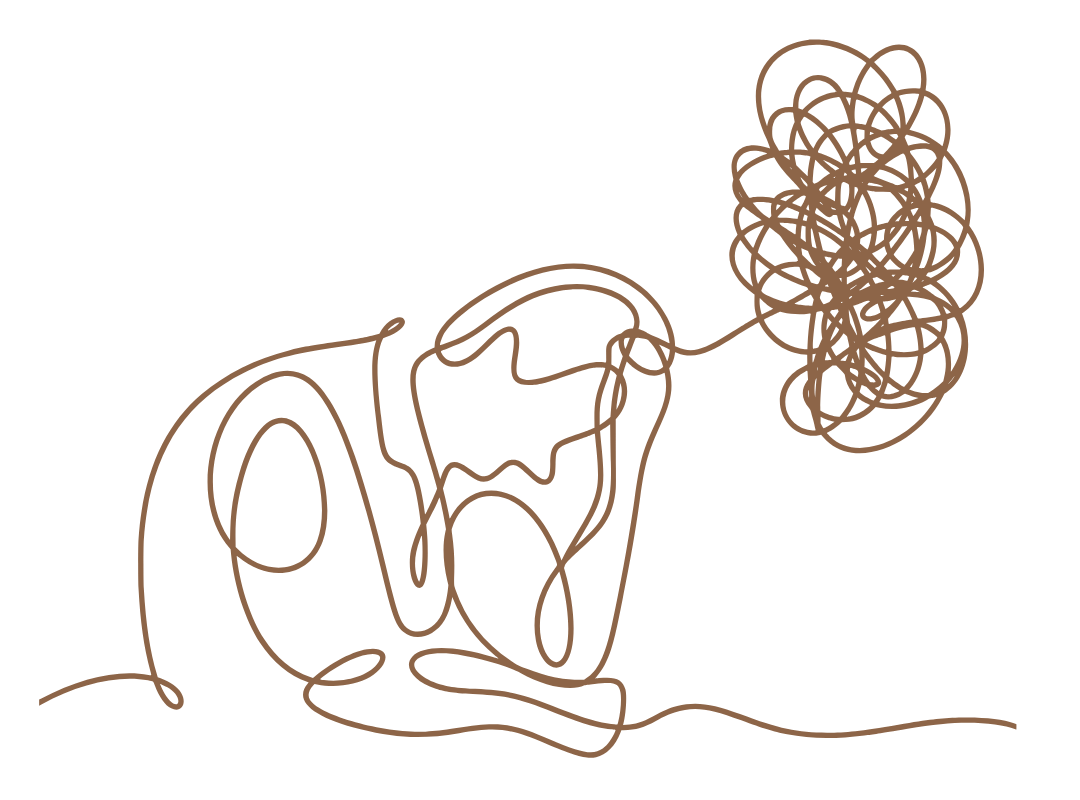
“I should do more.”
“I can’t do more.”
“I should do more.”
“I can’t do more.”
On repeat.
Many of my clients are living inside this same loop.
They care deeply. They want to help. But they are also working within systems that demand productivity, limit time, and keep them financially tethered. The result is a quiet, chronic tension:
How do I show up for everything?
The truth is, no one person can.
And that doesn’t make you morally deficient.
When Anxiety Has Nowhere to Go
Anxiety tends to ask the same question over and over:
“How do I fix this?”
For many personal stressors — a conflict at work, a financial concern, a parenting challenge — there is usually at least one possible action step.
But global instability is different.
War, climate events, economic shifts, social unrest, and humanitarian crises are not problems that one individual can solve.
When there is no clear action step, anxiety has nowhere to land.
Instead, it begins to circulate through the nervous system as urgency.
That urgency often shows up as:
doom-scrolling through news and social media
over-functioning or trying to do everything
constant information seeking
emotional exhaustion and burnout
We scroll past tragedy.
We feel sad, angry, and distressed.
Maybe we leave a comment or share what we see.
And then, almost immediately, we switch back into work mode.
There is no time to metabolize what we just witnessed.
No pause.
No communal processing.
Just activation followed by suppression.
Over time, this pattern creates chronic stress and nervous system fatigue.
And eventually, it takes a toll.
Empathy vs. Overload
In times of global distress, many people unintentionally confuse empathy with nervous system overload.
But they are very different experiences.
Empathy is spacious.
It allows us to feel with others while remaining grounded in ourselves. It opens the heart without overwhelming the body.
Nervous system overload, on the other hand, feels urgent.
The body becomes tight, braced, and watchful. Thoughts speed up. Perspective narrows. The mind begins scanning for immediate solutions.
Empathy says:
“This hurts.”
Overload says:
“I have to fix this right now or I can't tolerate the feeling.”
Sometimes hypervigilance disguises itself as moral urgency.
But sustainable care — the kind that supports real change — requires stability.
The human body and nervous system were never designed to process the suffering of the entire world in real time.
And yet, through our phones and news feeds, that is exactly what many of us are attempting to do every day.
The False Choice
When we can’t clearly distinguish between empathy and emotional overload, we begin to trap ourselves in impossible choices:
Care for my family
or
Care about the world.
Rest
or
Engage.
Be okay
or
Be ethical.
But this is a false binary.
Caring deeply about injustice — whether it is happening in your neighborhood, on local university campuses, or across the globe — does not require sacrificing your own nervous system.
Here in San Francisco and throughout the Bay Area, many people feel called to stay engaged in both local community issues and global crises.
That desire to care is meaningful.
But if we start believing that exhaustion equals virtue, burnout becomes inevitable.
And if we believe that calm equals apathy, we may remain trapped in constant activation.
In reality, steadiness is not indifference.
Steadiness is capacity.
A regulated nervous system is what allows us to care, respond thoughtfully, and remain engaged for the long term.
The Role of Systems
This pressure to stay constantly informed and responsive does not arise in isolation.
Many modern systems — particularly digital media platforms and productivity-driven work cultures — reward constant attention and continuous output.
We are expected to stay informed, emotionally engaged, productive, and responsive all at once.
Chronic time scarcity has become normalized.
Overextension is often framed as dedication.
And exhaustion becomes a quiet badge of honor.
When we internalize these pressures, we begin to interpret our natural limits as personal failures.
But your nervous system has limits because it is human.
Not because you are weak.
What Regulated Engagement Looks Like
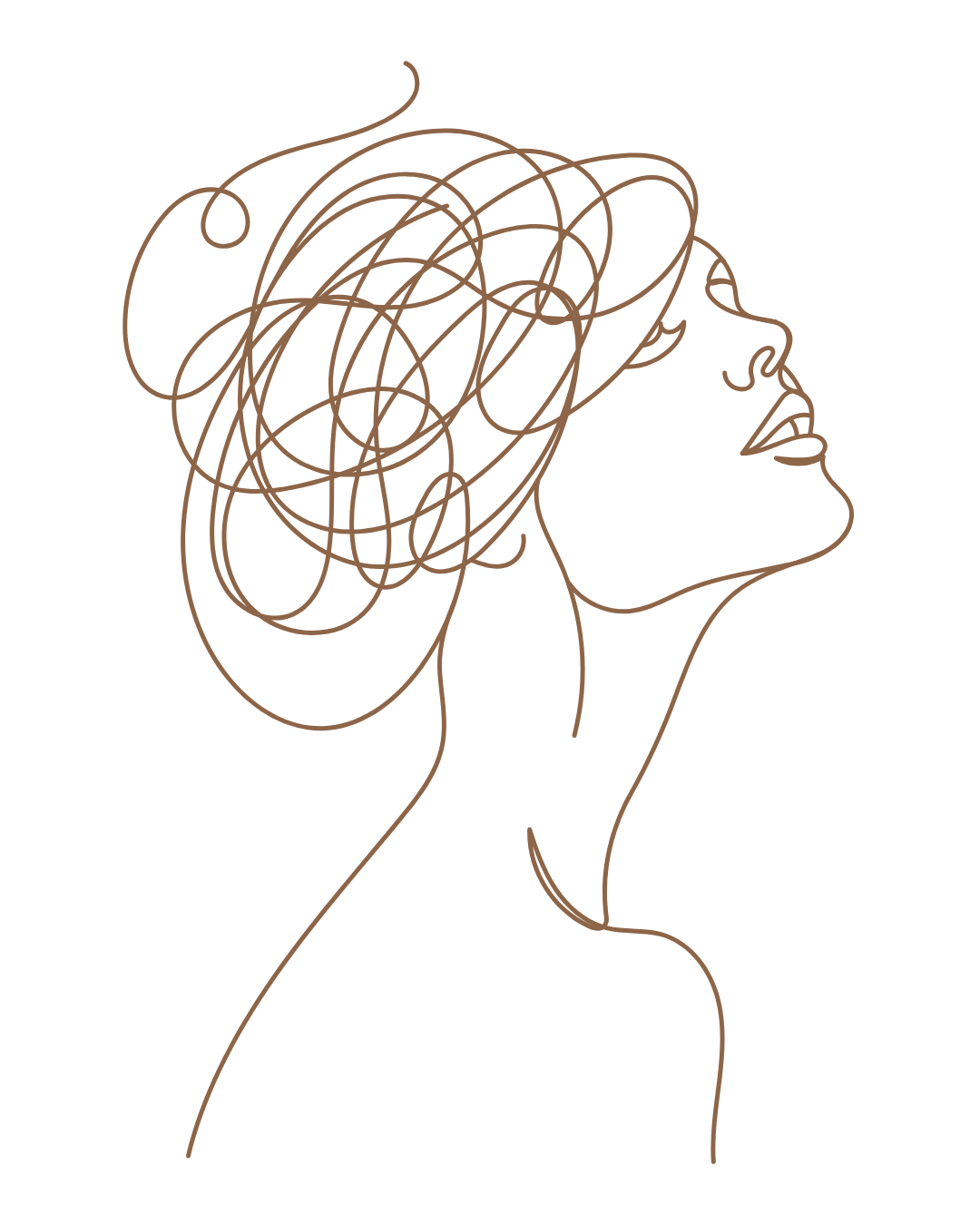
If burnout is the result of chronic activation without restoration, then the alternative is regulated engagement.
Regulated engagement means participating without abandoning yourself.
It is a nervous system skill that means:
Staying informed intentionally, not compulsively.
Choosing specific avenues of contribution rather than trying to solve everything.
Allowing grief without demanding immediate resolution.
Resting without moralizing it.
It means recognizing that sustained care requires rhythm — activation and restoration.
It also means accepting that tending to your own life is not a betrayal of collective care.
Reclaiming Calm
Reclaiming calm in a world that is not calm is not denial; it is a necessary response. It is a form of nervous system regulation. It is a refusal to let constant activation dictate your internal state.
This does not mean numbing out. It does not mean disengaging.
It means increasing your capacity to hold multiple truths at once.
In Internal Family Systems (IFS) therapy, we work with the idea that we all have different parts inside us. There may be:
A part that feels outrage.
A part that feels grief.
A part that feels overwhelmed.
A part that wants to protect your family.
A part that feels guilty for not doing more.
These parts can conflict with each other. But they do not have to dominate you.
When you develop steadiness, you can listen to each part without being hijacked by it. You can feel grief without collapsing. You can care deeply without burning out. You can act with intention rather than urgency.
Steadiness increases discernment.
Discernment increases effective action.
You cannot carry the entire world on your shoulders.
And abandoning yourself does not save it.
It is possible to hold both:
Your own stress and the world’s suffering.
Your privilege and your pain.
Your family and your care for the collective.
If your care destroys you, it will not last.
The world does not need more burned-out people. It needs regulated ones.
You do not have to hold all of this alone. Support for your nervous system is available. Therapy - including IFS - can help you build the steadiness and resilience that allow your care to endure.
If you’re curious about working together, you can learn more about Internal Family Systems therapy or explore whether IFS intensives might be a supportive next step for you.
